1. Current Challenges of Traditional Municipal Pipes
In recent years, with the rapid advancement of urbanization and the continuous promotion of urban infrastructure renewal, a large number of municipal pipe network renovation projects have been launched across regions. Traditional pipeline materials, including concrete pipes, carbon steel pipes, ductile iron pipes, and ordinary plastic pipes, have gradually exposed obvious limitations in long-term operation.
Steel and iron pipes are highly susceptible to rust, corrosion and perforation in underground damp, sewage and salt‑alkali environments, leading to frequent water leakage, pipe bursting and road collapse accidents. They require regular anti‑corrosion maintenance, which brings high long-term operation and maintenance costs. Concrete pipes are bulky, brittle and difficult to transport and construct, with high requirements for construction machinery and site space. Their inner walls are rough, resulting in high fluid resistance, easy scaling and blockage, which reduces drainage efficiency over time. In addition, the service life of traditional pipes is generally only 20 to 30 years, which can no longer meet the long-term, high‑standard needs of modern urban construction.
2. Core Advantages of FRP Pipes in Municipal Engineering
Against this background, FRP (fiberglass-reinforced plastic) pipes have rapidly become the preferred alternative to traditional pipes in municipal engineering. Their comprehensive performance advantages perfectly solve the pain points of traditional pipe networks.
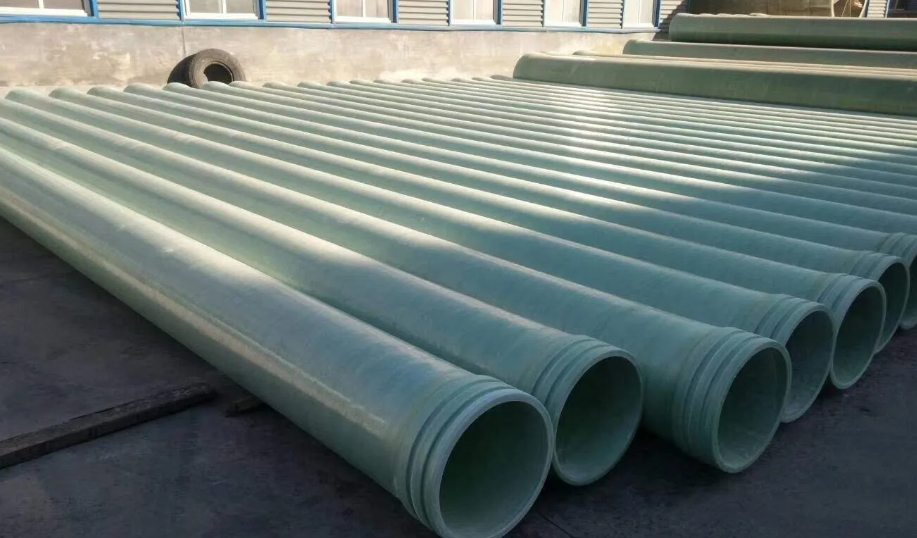
First, FRP pipes have excellent corrosion resistance. Made of high-performance resin and glass fiber, they feature stable chemical properties and can resist acid, alkali, salt and sewage corrosion. They will not rust, rot or deteriorate even in harsh underground environments, greatly reducing the risk of pipeline leakage and damage.
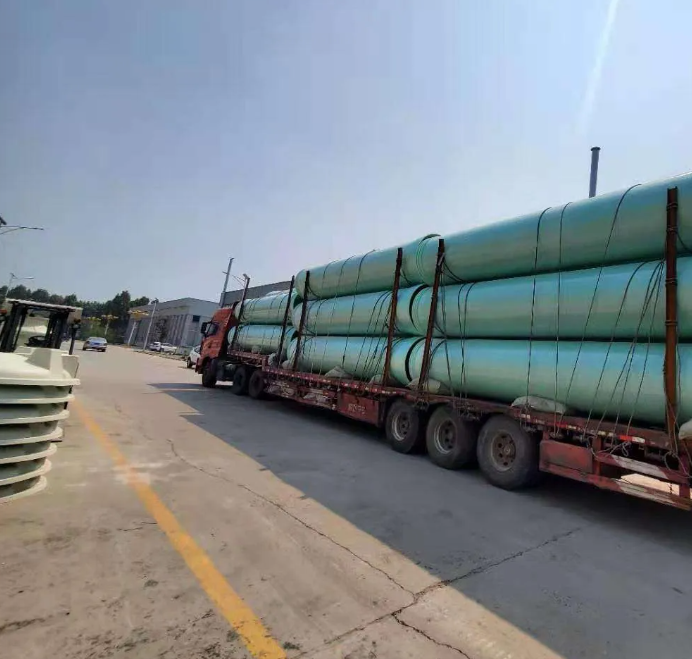
Second, FRP pipes are lightweight yet high in strength. They are only about 1/4 the weight of steel pipes and 1/5 the weight of concrete pipes of the same diameter, making transportation and installation extremely convenient. Construction can be completed with small and medium‑sized equipment, reducing construction difficulty, labor input and mechanical costs.
Third, construction efficiency is significantly improved. FRP pipes adopt flexible socket connections with reliable sealing performance, eliminating complex welding or heavy hoisting operations. The construction speed is 3 to 5 times faster than that of concrete pipes, which helps shorten the construction period and reduce the impact on urban traffic and residents’ lives.
Fourth, FRP pipes feature a long service life and low overall cost. Their design service life can reach more than 50 years, nearly twice that of traditional pipes. With almost no later maintenance required, the overall life-cycle cost is far lower than that of concrete and metal pipes.
In addition, the inner wall of FRP pipes is smooth with a low roughness coefficient, which improves water delivery and drainage efficiency, reduces energy consumption for pumping, and meets the development needs of energy‑saving and low‑carbon municipal engineering.
3. Wide Application of FRP Pipes in Municipal Renovation Projects
At present, FRP pipes have been widely used in municipal drainage, sewage treatment, rainwater diversion, urban pipe network renewal and other projects in many regions. They are especially suitable for large‑diameter, long‑distance and complex geological conditions.
In coastal cities, where soil and groundwater contain high salinity, FRP pipes show unique anti‑corrosion advantages and effectively avoid early corrosion failure. In old urban areas with narrow construction space, the lightweight and convenient construction characteristics of FRP pipes make them the first choice for trenchless and micro‑trenching projects.
With the continuous promotion of urban renewal policies and the continuous improvement of engineering construction standards, more and more municipal projects are choosing FRP pipes to replace traditional pipes. This trend not only improves the quality and safety of urban infrastructure, but also promotes the green, high‑efficiency and sustainable development of the municipal engineering industry.
4. Future Development Trend of FRP Pipes in Municipal Construction
Looking forward, with the further advancement of smart cities and sponge city construction, the application scope of FRP pipes in municipal engineering will continue to expand. The demand for high-performance, long-life and environmentally friendly pipeline materials will further increase.
FRP pipes will play a greater role in rainwater recycling, sewage treatment, underground integrated pipe corridors and other fields. Technological upgrades such as higher pressure resistance, better wear resistance and smarter structural design will further enhance their competitiveness. It is expected that FRP pipes will become the mainstream pipeline choice in municipal engineering, comprehensively accelerating the replacement of traditional pipes and promoting the high-quality development of urban infrastructure.


 <
<






 Previous:
 Next:
Next: