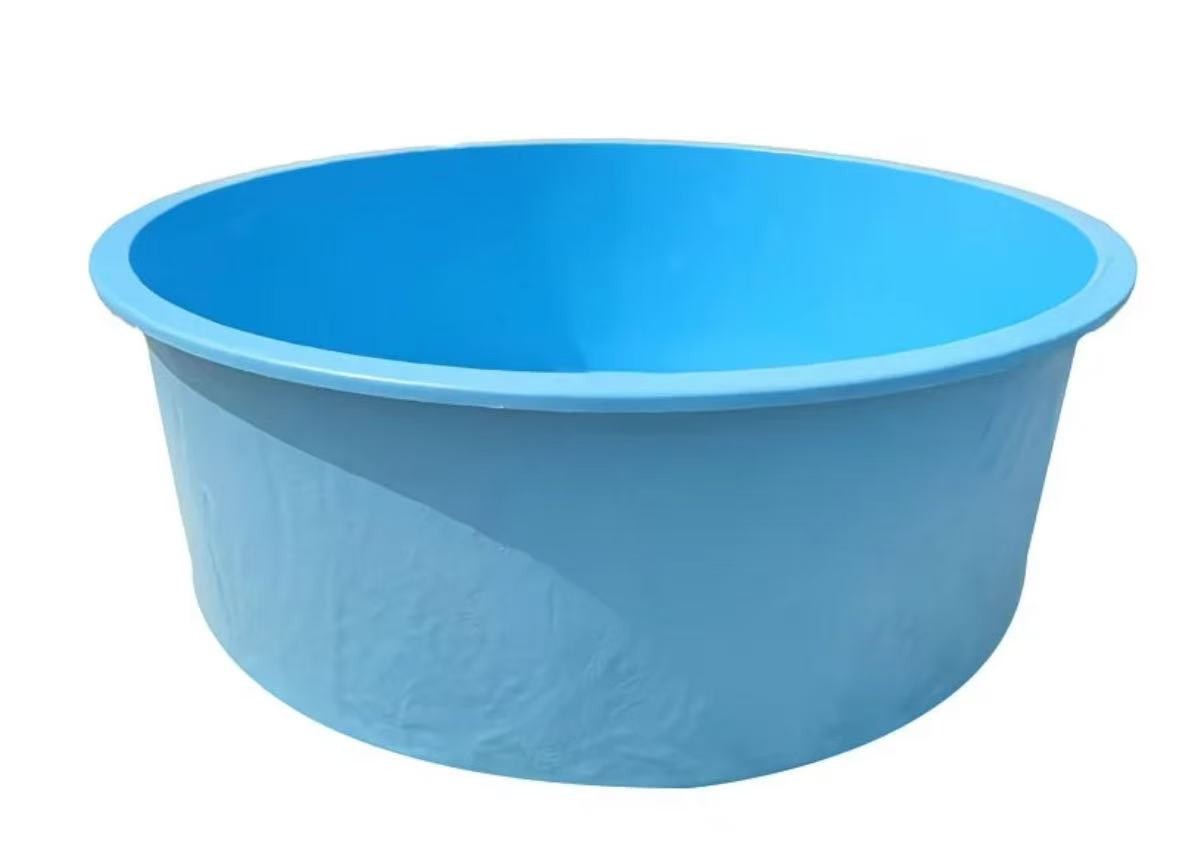
In recent years, with the continuous upgrading of industrial production technology and the increasing emphasis on environmental protection and safety, the requirements for industrial liquid storage equipment have become more and more strict across the globe. Industries such as chemical engineering, environmental protection, water treatment, oil and gas, and food processing have put forward higher standards for storage equipment, as the safety of stored liquids directly affects production efficiency, environmental protection compliance and even personnel safety. Whether it is the storage of corrosive chemical raw materials, the collection and treatment of industrial wastewater, the storage of desalinated seawater in coastal areas, or the temporary storage of crude oil and refined products in oil and gas fields, the core demands for storage equipment are consistent: strong corrosion resistance, reliable leak-proof performance, long-term durability and environmental friendliness. Against this background, FRP (Fiberglass Reinforced Plastic), GRP (Glass Reinforced Plastic) and fiberglass tanks, as high-performance composite storage vessels, have gradually replaced traditional storage equipment such as carbon steel tanks, stainless steel tanks and concrete tanks, becoming the core choice in various industrial fields due to their unique comprehensive advantages.
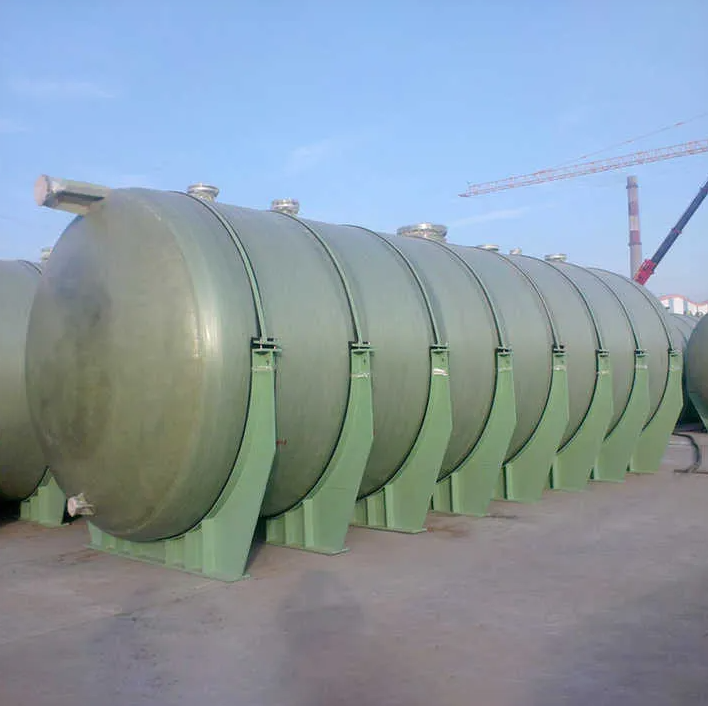
Made of high-quality glass fiber and high-performance polymer resin matrix through professional molding technology, FRP, GRP and fiberglass tanks have inherent chemical inertness, which enables them to resist the long-term corrosion of various harsh media. These media include strong acids such as sulfuric acid and hydrochloric acid, strong alkalis such as sodium hydroxide, various salts and salt solutions, volatile industrial chemicals, and high-salt seawater in coastal desalination projects. Unlike steel tanks that are prone to rust and corrosion under the action of corrosive media, which require frequent anti-corrosion coating and maintenance, or concrete tanks that are easy to crack, erode and seep under long-term contact with chemicals, these composite tanks can maintain stable structural performance even in harsh industrial environments. This not only avoids the risks of liquid leakage and secondary environmental pollution, but also reduces the economic losses caused by equipment failure. Under normal use and proper daily maintenance, the service life of FRP, GRP and fiberglass tanks can reach more than 30 years, which is far longer than that of traditional steel tanks (15-20 years) and concrete tanks (20-25 years), greatly reducing the frequency of equipment replacement and long-term capital investment.
In addition to excellent corrosion resistance, FRP, GRP and fiberglass tanks also have obvious advantages in weight, installation efficiency and design flexibility, which further enhances their competitiveness in the industrial storage market. Compared with steel tanks of the same capacity and pressure rating, FRP/GRP/fiberglass tanks are 70-80% lighter, which greatly reduces the difficulty and cost of transportation and on-site installation. For large-scale storage projects with a capacity of thousands of liters or even tens of thousands of liters, or remote construction sites where large hoisting equipment is difficult to reach, the lightweight feature of these tanks can save a lot of transportation costs and construction time, and reduce the requirements for foundation construction. Unlike concrete tanks that require complex and time-consuming on-site pouring, FRP/GRP/fiberglass tanks can be prefabricated in the factory according to design specifications and then assembled on site, which greatly shortens the construction period and improves project efficiency. Moreover, these tanks can be fully customized according to the actual needs of different industries and projects, including volume, shape, pressure rating, wall thickness and accessory configuration. They can be integrated with manholes, level indicators, discharge valves, overflow pipes and other components to meet the diversified storage needs of chemical, water treatment, oil and gas and other fields.
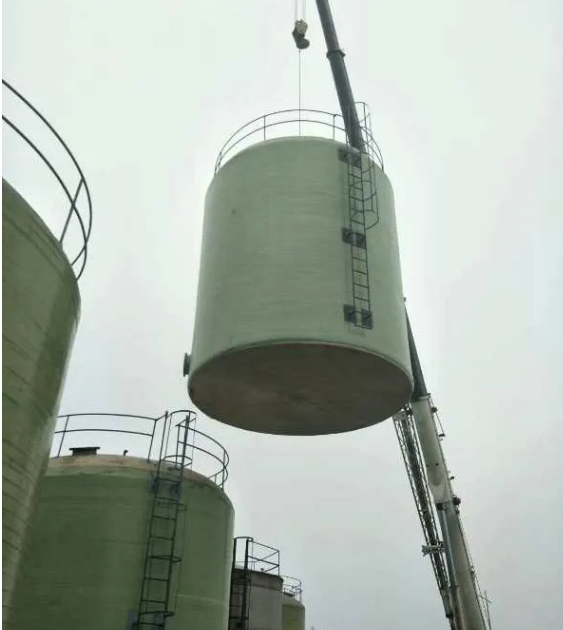
Furthermore, FRP, GRP and fiberglass tanks are in line with the global green and low-carbon development trend, with outstanding environmental protection and energy-saving advantages. The composite material used in the tanks is recyclable, and no harmful substances will be leached into the stored liquid or the surrounding environment during use, which helps enterprises meet environmental protection compliance requirements. Their smooth inner surface is not easy to adhere to media and scale, which not only maintains the stability of storage efficiency but also reduces the frequency of cleaning and maintenance, thus lowering the energy consumption and labor costs of subsequent operation. In addition, the lightweight design of the tanks reduces carbon emissions during transportation and installation, contributing to the realization of green industrial development goals.
Industry insiders pointed out that with the continuous advancement of industrialization and the increasingly strict environmental protection and safety standards in various countries, the market demand for FRP, GRP and fiberglass tanks will continue to grow steadily. In the future, professional manufacturers will further optimize production technology, improve product performance and quality, and focus on the research and development of intelligent and energy-saving products, such as adding intelligent monitoring systems to realize real-time monitoring of liquid level, pressure and temperature in the tanks. This will further expand the application scope of FRP/GRP/fiberglass tanks, better meet the diversified and high-standard needs of the industrial storage field, and continue to lead the upgrade and high-quality development of the modern industrial liquid storage industry.


 <
<






 Previous:
 Next:
Next: